
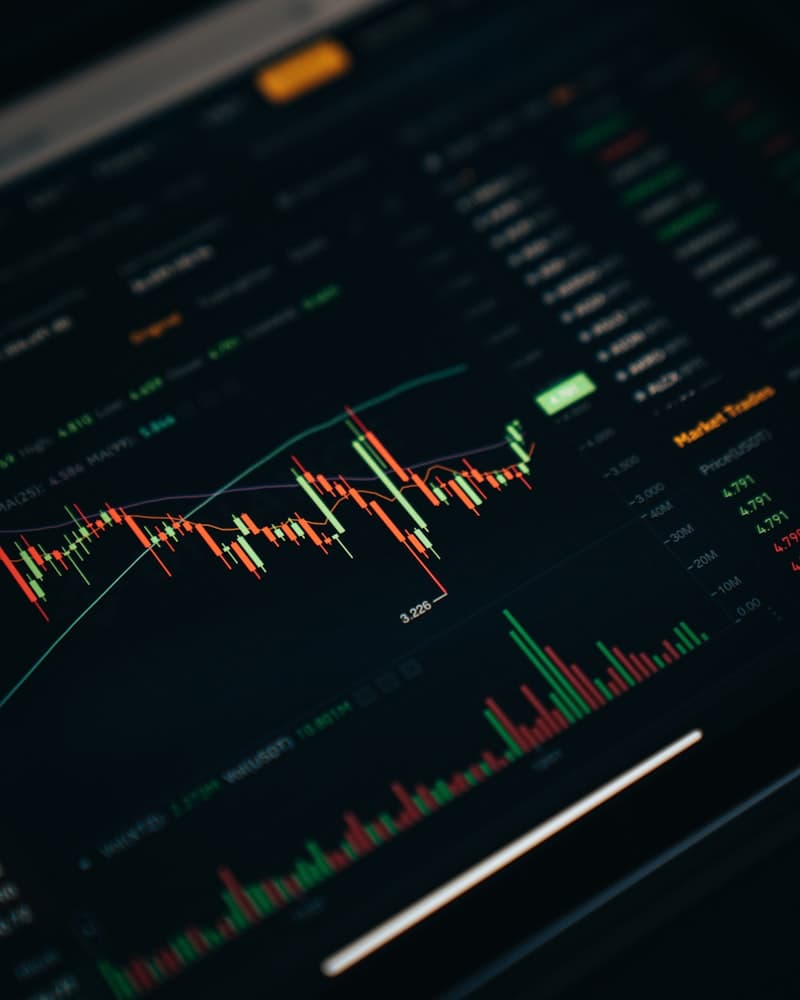
You have a strategy with an impressive backtest: 87% win rate, 4% drawdown, 130% annualised return. You go live and within three weeks you are losing money. What just happened has a name: over-fitting, also known as curve-fitting.
The problem with classic backtesting
When you optimise a strategy on the same historical data you use to evaluate it, you fall into an inevitable statistical bias. The algorithm is not learning market patterns — it is memorising the noise of a specific data sample. The more parameters you optimise, the more likely you are to find a combination that performs spectacularly on that specific period and fails on any other.
Classic backtesting has three main biases that distort results:
- Look-ahead bias. The strategy uses information that would not be available in real time (future closing prices, already-known news). Common in careless implementations.
- Survivorship bias. Optimisation is done on assets that survived the analysed period, ignoring those that went bankrupt or were delisted.
- Over-fitting. The most dangerous and least obvious: too many parameters fitted to too little data.
What Walk-Forward is and how it works
Walk-Forward Optimization (WFO) replicates how trading actually works. Instead of optimising on all available data, it divides the historical record into time windows and applies the following iterative process:
| Phase | Data type | What is done |
|---|---|---|
| In-Sample (IS) | Training data | Optimise parameters → find the best configuration |
| Out-of-Sample (OOS) | Validation data | Apply those parameters on never-seen data |
| Next window | IS shifted forward in time | Repeat the process advancing the window |
The result is a series of chained OOS periods forming a Walk-Forward equity curve. If the strategy is robust, that curve will be positive even though those data were never seen during optimisation. If it is over-fitted, the OOS curve will collapse.
Key metrics for evaluating WFO
The most important result of Walk-Forward is not total profitability, but the relationship between OOS and IS performance:
- WF Efficiency ratio. OOS profit / IS profit. A ratio above 50–60% indicates the strategy generalises well. Below 30%, a sign of severe over-fitting.
- Consistency across windows. The number of positive OOS windows out of the total. A good strategy should be positive in at least 60–70% of windows.
- Parameter stability. If optimal parameters change radically between IS windows, the strategy has no stable edge.
- Monte Carlo on OOS. Apply Monte Carlo simulations to the OOS series to estimate the distribution of expected drawdowns in live trading.
Walk-Forward vs. Anchored Walk-Forward
There are two main WFO variants with distinct characteristics:
Standard (rolling) Walk-Forward uses a fixed-size IS window that advances in time. Each iteration discards the oldest IS data. It is more adaptive but requires more total data to be statistically significant.
Anchored Walk-Forward fixes the start of the IS window and expands it. The advantage is that each optimisation incorporates more historical data, but the last iterations have very long IS windows, which can suppress adaptation to market regime changes.
How much data you need
The most conservative rule of thumb states you need at least 10 times more data in IS than you will test in OOS. A typical window would be an IS/OOS ratio of 3:1 or 4:1 (three or four months of IS per month of OOS).
For intraday strategies on M5 or M15, this translates to years of tick data. For H4 or D1 strategies, even a 5-year history may be insufficient for statistically rigorous WFO.
Practical application in EV Quant Lab
EV Quant Lab implements Walk-Forward in both rolling and anchored modes, with granular configuration of IS/OOS windows, number of iterations and evaluation metrics. The ML Lab module can apply feature selection and cross-validation before WFO to reduce the parameter search space and minimise over-fitting risk.
If a strategy passes WFO with a consistent efficiency ratio and healthy Monte Carlo results, you have a solid statistical basis to go live. If it fails WFO, the perfect backtest is worthless.
Backtesting and walk-forward results do not guarantee future performance. Trading involves risk of capital loss.