
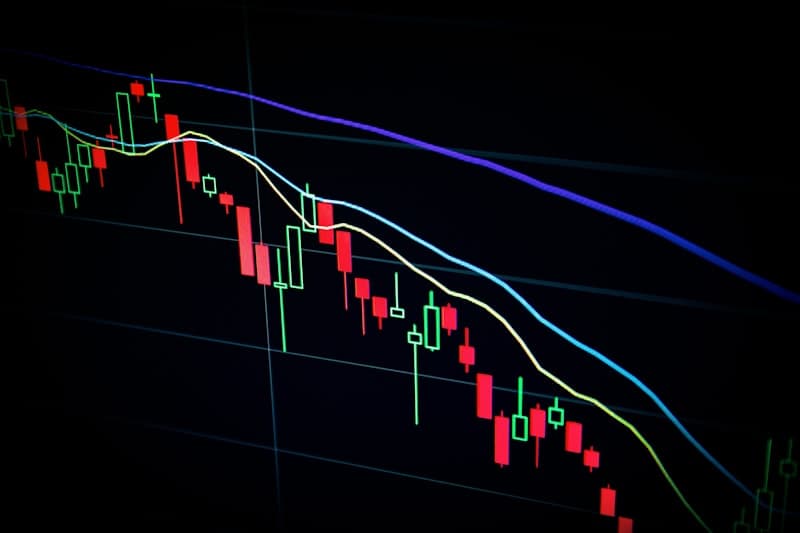
A liquidity sweep happens when price pushes beyond an obvious high or low to trigger the orders accumulated there — and then reverses. It is a stop hunt, and it is the event that precedes most institutional moves. Understanding it completely changes where you place your entries and your stops.
Why price hunts stops
Retail traders place stops in obvious spots: just below the last low, just above the last high, at equal highs/lows. Those stops are liquidity — orders waiting to be filled. Institutions need that liquidity to fill large positions. So price goes for it: it sweeps the level, triggers the stops, and then moves in the real direction.
How to identify a sweep
- Equal highs/lows (EQH/EQL). Two or more touches of the same level accumulate stops. The sweep crosses them and reverses.
- Swing highs/lows. Price breaks a relevant high/low and quickly returns below/above — a false breakout.
- Long wick. A sweep usually leaves a pronounced wick: price touched the level but did not close beyond it.
What a liquidity sweep looks like on the chart
The candle does the telling. A sweep prints a wick that pushes clearly past the level and a body that closes back inside the prior range — the market reached through the level, took what was there, and refused to stay. As a rough filter, the wick beyond the level should be at least as long as the candle body; a two-thirds wick on a small body is a textbook sweep.
Three details separate a real sweep from a candle that merely looks like one:
- The close. This is the whole signal. Beyond the level and holding is a breakout. Beyond the level and back inside is a sweep. Nothing else in the candle overrides where it closed.
- The speed. Sweeps are quick. Price spikes through, fills the stops and comes back, often inside one or two candles. A level that is worked slowly over an hour is being accepted, not swept.
- The volume. The stops triggering are real orders, so a genuine sweep usually arrives with a volume spike. A drift through a level on thin volume is not a sweep, it is a lack of interest.
There is no separate "liquidity sweep candlestick pattern" to memorise. What you are looking at is usually a pin bar or a long-wicked hammer or shooting star — the pattern is ordinary. What makes it a sweep is where it happens: at a level that visibly holds other traders' stops.
Bullish and bearish sweeps
Liquidity sits on both sides of the market, and which side gets taken tells you which way the move is likely to go next.
A bullish liquidity sweep takes the sell-side. Price drops below an obvious low — a prior swing low, equal lows, the session low — triggering the stops of everyone long and the sell orders of everyone trading the breakdown. Then it reverses upward. The institutions who needed to buy just got their fill from the traders who were forced out.
A bearish liquidity sweep is the mirror image on the buy-side. Price pushes above an obvious high, triggering the stops of shorts and the buy orders of breakout traders, and then reverses down.
The naming trips people up, so it is worth being blunt about it: a sweep is named for the direction it resolves in, not the direction of the spike. The spike in a bullish sweep points down. If you name them by the wick you will read every setup backwards.
How to spot one in real time
In hindsight every sweep is obvious. Live, you are looking at a candle that has not closed yet, and the honest answer is that you cannot be certain until it does. What you can do is prepare:
- Mark the pools before the session. Equal highs and lows, yesterday's high and low, the Asian session range. If you have not marked them in advance you will be identifying sweeps after they have already paid.
- Wait for the close. Not the touch, not the spike — the close back inside. This single rule discards most false signals, and it is the one traders skip when they are impatient.
- Demand confirmation on a lower timeframe. A sweep on the 4H means little on its own. A sweep on the 4H followed by a change of character on the 5M is a setup.
Sweeps and order blocks work together
A sweep tells you the move is about to start. An order block tells you where to get in. That is why the two concepts are almost always taught together, and why trading either one alone tends to disappoint.
The sequence is consistent: price sweeps a liquidity pool, structure breaks in the opposite direction, and then price pulls back into the order block — the last opposing candle before the impulsive move away. The sweep gave you the reason. The order block gives you the price, and it gives you a stop that sits somewhere defensible instead of an arbitrary number of pips away.
Taking the sweep without waiting for the order block usually means entering mid-impulse with a wide stop. Taking the order block without a preceding sweep usually means entering a level that has not yet been cleared of the orders that will run price through it.
The entry strategy
- Identify the target liquidity pool (EQH/EQL, session highs/lows).
- Wait for the sweep of that level.
- Confirm a change of structure (ChoCH) on a lower timeframe after the sweep.
- Enter in the direction of the new bias, with a stop on the other side of the sweep wick.
This sequence — sweep → ChoCH → entry on an FVG/OB — is among the highest-probability setups in SMC. The sweep gives you timing; structure gives you confirmation.
Four mistakes that cost money
- Entering on the wick. Buying the moment price spikes below a low is buying into a move that has not finished. The stop-run can extend well past the level before it turns.
- Treating every long wick as a sweep. A wick at a random price is noise. A wick through a level where stops visibly sit is a sweep. The level is the signal, not the candle.
- Ignoring the higher timeframe. A bullish sweep inside a daily downtrend is a countertrend trade. It can work, but it is not the same trade as a bullish sweep inside a daily uptrend, and it should not be sized the same.
- Putting the stop at the level. The level is exactly where the market just proved it will reach. Put the stop beyond the sweep wick, and if that makes the trade too large, take a smaller position rather than a closer stop.
Detect sweeps in real time
Our Liquidity Sweeps indicator marks them instantly with alerts — free on TradingView. Or let Master of Liquidity EA trade them on its own on MT5.
Related: what are Order Blocks · what is a Fair Value Gap.
Educational content. Does not guarantee profitability. Trading involves risk of capital loss.